
Teeth whitening is one of the most asked-about cosmetic dental treatments and also one of the most misunderstood in terms of safety. People who have tried home kits with patchy results wonder if professional treatment is different. People who have heard that whitening damages enamel wonder whether it is worth the risk at all.
Overview
Both concerns are reasonable, and both deserve a straight answer rather than reassurance designed to get someone to book.
Does Teeth Whitening Damage Enamel?
This is the question that stops a lot of people. The short answer is that professional whitening done correctly does not damage enamel.
Tooth enamel is the outer protective layer of the tooth. It does not contain pigment. The staining that makes teeth look yellow or dull sits in the dentine layer beneath the enamel and in the microscopic pores and surface of the enamel itself.
Whitening agents, typically hydrogen peroxide or carbamide peroxide, penetrate the enamel to reach and break down those stain molecules. The enamel structure itself is not affected when the concentration of the agent and the treatment time are within safe parameters.
Where enamel damage becomes a risk is with overuse of high-concentration agents, using whitening products on compromised or cracked enamel, or prolonged exposure beyond recommended times. Professional treatment with proper assessment beforehand eliminates these risks. Home kits used without guidance do not.
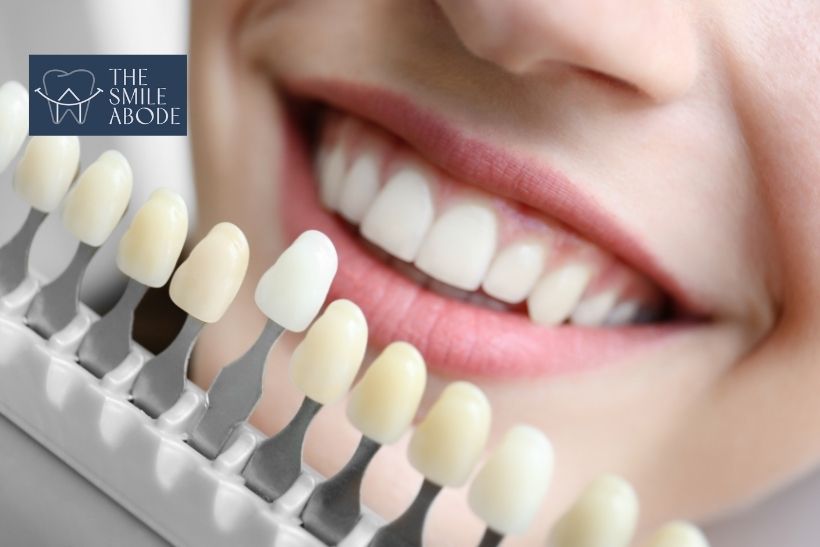
What Is the Difference Between Professional and Home Whitening?
The active ingredient in both is usually hydrogen peroxide or carbamide peroxide. The concentration, the delivery method, and the control over the process are where the differences matter.
Home whitening kits use lower concentrations of whitening agent. Results are subtle and take weeks to build. They also do not include a pre-treatment assessment, so conditions that make whitening unsuitable, like significant sensitivity, enamel erosion, or active decay, go unidentified.
Professional whitening at The Smile Abode uses the Philips Zoom White Speed system, a chair-side whitening system that delivers results in a single session using a higher concentration of whitening agent activated by a specific light source. The gums and soft tissue are protected with a barrier throughout. The process is controlled and monitored by Dr Anirudh from start to finish.
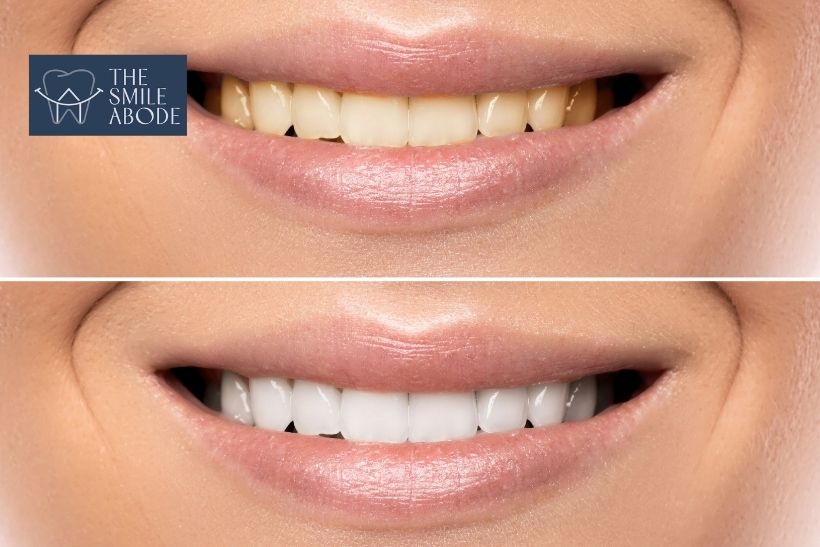
Professional whitening achieves in one session what home kits take months to approach, and with proper assessment beforehand, it does so without the risks that come from unmonitored use.
Who Is Not Suitable for Teeth Whitening?
Not everyone is a candidate. A proper assessment before treatment is how this is determined. Whitening is not appropriate for:
• Teeth with active decay or significant enamel erosion
• People with very sensitive teeth who have not had sensitivity assessed and addressed
• Patients with crowns, veneers, or large fillings on visible teeth , whitening does not affect these restorations and can create a colour mismatch
• Pregnant or breastfeeding women
• Children under 18
This assessment happens before any whitening is recommended at The Smile Abode. If whitening is not appropriate, Dr Anirudh will explain why and discuss alternatives like veneers or Bioclear that address tooth colour in a different way.
What About Sensitivity After Whitening?
Some degree of temporary sensitivity after whitening is common and normal. The whitening agent temporarily increases the permeability of the enamel, which makes the tooth more sensitive to temperature for a short period after treatment.
This sensitivity resolves within 24 to 48 hours in most cases. At The Smile Abode, desensitising agents are used alongside the whitening process to minimise this. Patients with pre-existing sensitivity are assessed before treatment, and the protocol is adjusted accordingly.
How Long Do Whitening Results Last?
Results from professional whitening typically last between 1 and 3 years, depending on dietary habits, smoking, and how well maintenance is managed. Foods and drinks that stain, such as coffee, tea, red wine, and certain sauces, accelerate the return of discolouration.
Occasional top-up treatments, either in-clinic or with take-home trays provided after the initial treatment, extend the results significantly. At The Smile Abode, this is discussed at the treatment appointment, so patients have a realistic picture of what maintenance looks like.
Conclusion
Frequently Asked Questions
Q. How white can my teeth actually get with professional whitening in Gurugram?
Results vary depending on the original shade and the type of staining present. Most patients achieve a noticeable improvement of several shades. Intrinsic staining from antibiotics or fluorosis responds less predictably than surface staining from food and drink.
Q. Is Zoom whitening done in the same session as the consultation?
At The Smile Abode, the consultation and whitening treatment can sometimes be done on the same day, depending on the assessment findings. If any issues are identified at assessment that need addressing first, treatment is scheduled for a subsequent appointment.
Q. Can I eat normally after teeth whitening?
For 24 to 48 hours after whitening it is recommended to avoid heavily pigmented foods and drinks, including coffee, tea, red wine, and tomato-based sauces. After that period, normal eating habits can resume.
Q. How much does teeth whitening cost at The Smile Abode in Gurugram?
Pricing is available at the clinic and discussed at the consultation. The Smile Abode is located at GF 46, M2K Corporate Park, Sector 51, Gurugram and is open all 7 days from 10 am to 8 pm.