The Smile Abode

Is Painless Root Canal Treatment in Gurugram Really Possible or Just a Marketing Claim?

Painless root canal. It sounds like the kind of thing a clinic puts on a banner to get people through the door. And given how deeply embedded the fear of root canals is, the scepticism is understandable.

Overview

But the claim is not marketing. It reflects a genuine shift in how root canal treatment is performed when the right technology, technique, and anaesthesia are used properly. The experience people dread is based on a version of this procedure that largely no longer exists in a well-equipped clinic.

At The Smile Abode in Gurugram, painless dentistry is a specific clinical approach rather than a phrase on a website. Dr Anirudh Garg specialises in endodontics and microscopic dentistry, with over a decade of experience performing root canal treatment with a particular focus on patient comfort at every stage.

Anxious patient receiving sedation dentistry for root canal treatment in Gurugram

Why Did Root Canals Get Such a Bad Reputation?

The fear is not invented. It comes from real experiences, just experiences from a different era of dentistry.

Older root canal techniques relied on manual instruments that were slower, less precise, and more physically demanding on the tooth and surrounding tissue. Anaesthesia was less reliable. Multiple long sittings were standard. The combination produced an experience that was genuinely uncomfortable.

That reputation has outlasted the reality. The procedure today, with rotary instrumentation, better anaesthetics, digital imaging, and microscopically guided technique, is a fundamentally different experience. The fear people carry into a root canal appointment in 2026 is based on something that a well-equipped clinic has largely solved.

What Makes Root Canal Treatment Painless at The Smile Abode?

Several specific things, rather than one single factor.

Anaesthesia That Actually Works

This sounds basic, but it is where a lot of the pain in traditional root canals comes from. Inadequate numbing was common. At The Smile Abode, the tooth and surrounding tissue are confirmed to be completely numb before the procedure begins. Nothing happens until that is established.

Rotary Instrumentation

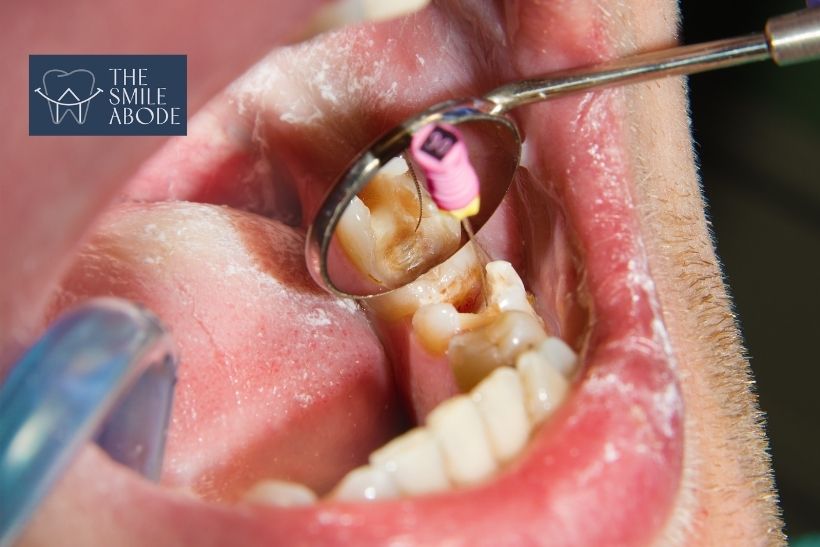
Modern root canal uses motorised rotary files to clean and shape the canal rather than manual hand filing. Faster, more precise, and significantly less traumatic to the tooth.

Microscopic Dentistry

Dr Anirudh uses microscopic techniques that allow the canal system to be visualised and treated with a level of precision not possible without magnification. This reduces the number of sittings needed and the amount of tissue manipulation involved.

Laser-Assisted Treatment

Laser-assisted root canal reduces bacterial load in the canal more effectively than irrigation alone and causes less post-operative discomfort. Painless dentistry at The Smile Abode incorporates laser technology for disinfection and tissue management where appropriate.

Sedation Dentistry for Anxious Patients

For patients with significant dental anxiety, sedation dentistry is available. The procedure happens while you are in a deeply relaxed state. Most patients have little to no memory of the treatment itself.

What Is the Actual Experience Like?

At The Smile Abode, a root canal typically takes 2 to 3 sittings. For context, a traditional root canal at some clinics takes 8 to 10 sittings. The reduction comes from the precision of microscopically guided treatment and rotary instrumentation rather than cutting corners.

During the procedure, patients describe the sensation as pressure rather than pain. The area is numb throughout. Some mild soreness in the day or two after treatment is normal as the tissue settles, but it is manageable with standard pain relief.

What most patients say afterwards is some version of the same thing: they wish they had not waited as long as they did.

What Happens After Root Canal Treatment?

The root canal treats the infection. What protects the tooth afterwards is a crown. A root canal-treated tooth loses moisture over time and becomes more brittle. Without a crown, it is significantly more vulnerable to fracture under biting pressure.

Dental crowns at The Smile Abode are fabricated to match the natural colour and shape of surrounding teeth. For patients also thinking about improving the appearance of their smile, the crown stage is a natural point to discuss smile makeover options alongside the restoration.

Root canal specialist using a microscope for precision endodontic treatment in Gurugram

Conclusion

Painless root canal treatment in Gurugram is not a marketing claim. It is an accurate description of what the procedure feels like when done with modern technique, proper anaesthesia, and a specialist who performs it regularly. The version of root canal people are afraid of belongs to a different era of dentistry.

Book an Appointment

Frequently Asked Questions

Q. How many sittings does a root canal take at The Smile Abode in Gurugram?

Most cases are completed in 2 to 3 sittings. This is significantly fewer than a traditional root canal, which could take 8 to 10 sittings. Complex cases may require additional visits.

Q. Is sedation available for root canal treatment in Gurugram?

Yes. Sedation dentistry is available at The Smile Abode for patients with significant dental anxiety. The procedure takes place while the patient is in a deeply relaxed state with minimal awareness of the treatment.

Q. What happens if I delay getting a root canal?

The infection progresses. What could be treated and saved with a root canal may eventually require extraction. Acting sooner almost always means a simpler, less expensive outcome.

Q. How long does a root canal-treated tooth last?

With a proper crown placed afterwards and good oral hygiene, a root canal-treated tooth can last many years, and in many cases, a lifetime.

Call Now Button