
The Truth About Teeth Whitening Nobody Really Talks About
Teeth whitening in Gurugram is one of the most searched cosmetic dental treatments because almost everyone wants a brighter, cleaner-looking smile. Coffee, tea, wine, tobacco, ageing, and everyday food stains can slowly make teeth look dull even when your oral hygiene is good.
The problem is not interest. The problem is misinformation. Many people assume every whitening product works the same, that toothpaste can replace clinical whitening, or that whitening damages enamel. These beliefs often lead to disappointing results, uneven shades, sensitivity, or wasted money.
This guide explains the five biggest myths about teeth whitening, what actually happens during professional whitening, and when it makes sense to visit a cosmetic dentist for safer, more predictable results.
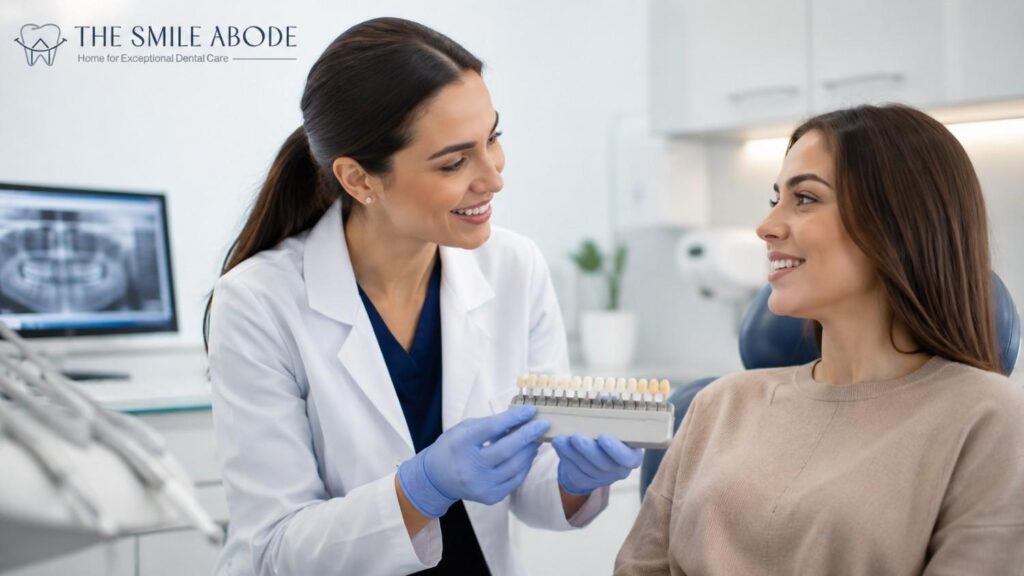
1. Whitening Works the Same on All Teeth
Why This Is Not True
Whitening only works on natural tooth enamel. It does not change the colour of dental crowns, bridges, veneers, bonding, or tooth-coloured fillings.
This matters because if you use a whitening product without a dental assessment, your natural teeth may become lighter while visible restorations stay the same shade. The result can look patchy instead of polished.
The type of stain also matters. Surface stains from coffee, tea, wine, and tobacco usually respond well to professional whitening. Deeper internal discoloration caused by trauma, medication, fluorosis, or enamel defects may need another cosmetic option, such as veneers or a smile makeover in Gurugram.
2. Whitening Toothpastes Give the Same Results as Professional Treatment
What Whitening Toothpastes Actually Do
Whitening toothpastes are useful, but they are often misunderstood. Most of them work by gently polishing surface stains. They do not penetrate enamel deeply enough to change the actual tooth shade in the way professional whitening can.
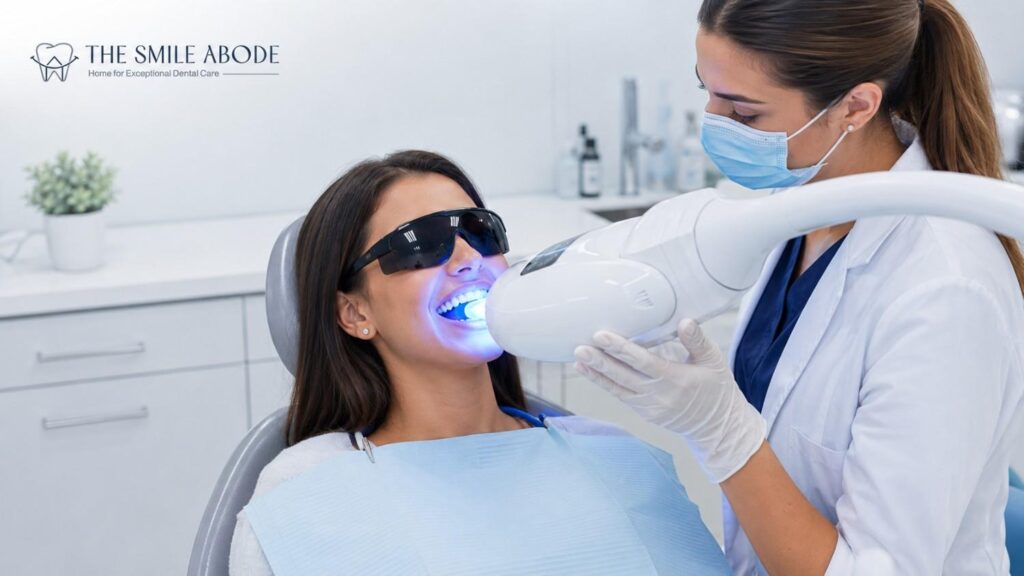
Professional teeth whitening uses clinically controlled whitening agents that break down stain molecules from within the tooth structure. This is why an in-clinic whitening session can brighten teeth by several shades, while toothpaste usually gives only mild maintenance-level improvement over time.
A practical way to think about it is simple: whitening toothpaste helps maintain brightness, while teeth whitening in Gurugram at a dental clinic is designed to create a visible shade change.
3. Teeth Whitening Damages Your Enamel
Separating Fact from Fear
This is one of the biggest concerns patients have. When whitening is planned and performed correctly, it does not damage enamel.
Problems usually happen when people overuse at-home kits, keep whitening strips on longer than recommended, use products with unsuitable concentrations, or repeat whitening too frequently. Gum irritation and sensitivity are also more likely when trays do not fit properly.
Professional whitening is different because the dentist checks your teeth and gums first, protects the soft tissues, uses a controlled whitening system, and adjusts the approach if you already have sensitivity. Mild sensitivity after whitening can happen, but it is usually temporary and manageable with the right aftercare.
4. Results Last Forever
The Reality of Whitening Maintenance
Whitening improves tooth shade, but it does not permanently stop future staining. Your results depend on your diet, oral hygiene, smoking or tobacco use, and how often you consume staining drinks such as coffee, tea, cola, or red wine.
For many patients, professional whitening results can last from several months to a few years with proper care. However, people who regularly consume staining foods and drinks may need touch-up sessions sooner.
How to Maintain Your Whitening Results
- Brush and floss consistently every day.
- Avoid heavy-staining food and drinks for the first 48 hours after treatment.
- Use a dentist-recommended whitening toothpaste for maintenance, not as a replacement for treatment.
- Schedule routine dental cleanings and check-ups.
- Ask your dentist about safe touch-up whitening when your shade starts to dull again.
5. Any Product or Clinic Will Give You the Same Result
Why the Source of Your Treatment Matters
Teeth whitening may seem simple, but the result depends on correct diagnosis, product quality, gum protection, whitening strength, shade planning, and aftercare. A cheap kit or poorly supervised treatment can leave patients with uneven results, gum irritation, or unnecessary sensitivity.
A professional advanced dental clinic in Gurugram will first assess whether whitening is suitable for your teeth. If you have untreated cavities, gum inflammation, exposed roots, severe sensitivity, or visible restorations in the smile zone, those issues should be discussed before whitening begins.
At The Smile Abode, whitening is planned as part of overall smile aesthetics. The goal is not just to make teeth lighter, but to make them look naturally brighter and balanced with your smile.
When Should You Choose Professional Teeth Whitening?
Professional whitening is a better choice if you want faster results, safer application, better shade control, or have tried over-the-counter products without meaningful improvement.
You should also choose a dentist-led approach if you have sensitive teeth, old fillings or crowns, deep stains, upcoming wedding or event plans, or concerns about uneven whitening.
The right consultation helps you understand what whitening can realistically achieve and whether another cosmetic dentistry option would give a better outcome.
Why Choose The Smile Abode for Teeth Whitening in Gurugram?
The Smile Abode in Sector 51, Gurugram, offers cosmetic and general dental care in a comfortable, technology-focused clinic environment. The team focuses on personalised treatment planning, patient comfort, and natural-looking smile outcomes.
- Dentist-supervised whitening for safer and more predictable results
- Assessment of stains, restorations, enamel condition, and sensitivity before treatment
- Guidance on Zoom teeth whitening, in-clinic whitening, and cosmetic smile options
- Clear aftercare instructions to help maintain results longer
- Convenient location for patients across Gurugram sectors 46, 47, 48, 50, 51, and 52
Conclusion
Teeth whitening is safe and effective when it is done for the right patient, with the right product, and under professional supervision. The biggest mistake is assuming every stain, every tooth, and every whitening option behaves the same way.
If you want a brighter smile without guesswork, start with a proper dental assessment. The Smile Abode can help you understand whether professional whitening is suitable for you and how to maintain a naturally brighter smile after treatment.
Book a teeth whitening consultation at The Smile Abode, Gurugram.
FAQs
Is teeth whitening safe for sensitive teeth?
Yes, but the dentist should assess the cause of sensitivity first. Professional whitening can be adjusted with sensitivity-control protocols and aftercare instructions.
How many shades lighter can teeth get with professional whitening?
Results vary from person to person. Many patients see teeth become several shades lighter, depending on the original shade, stain type, and enamel condition.
How soon can I eat or drink normally after whitening?
Most dentists recommend avoiding staining food and drinks for at least 48 hours after treatment. This includes tea, coffee, cola, red wine, dark sauces, and tobacco.
Can whitening fix grey or brown teeth?
It depends on the cause. Yellow and surface stains usually respond better. Grey, brown, trauma-related, or internal stains may need veneers, bonding, or a smile makeover plan.
How do I book teeth whitening at The Smile Abode?
You can call +91 92669 08886 or book through the contact page on thesmileabode.com.